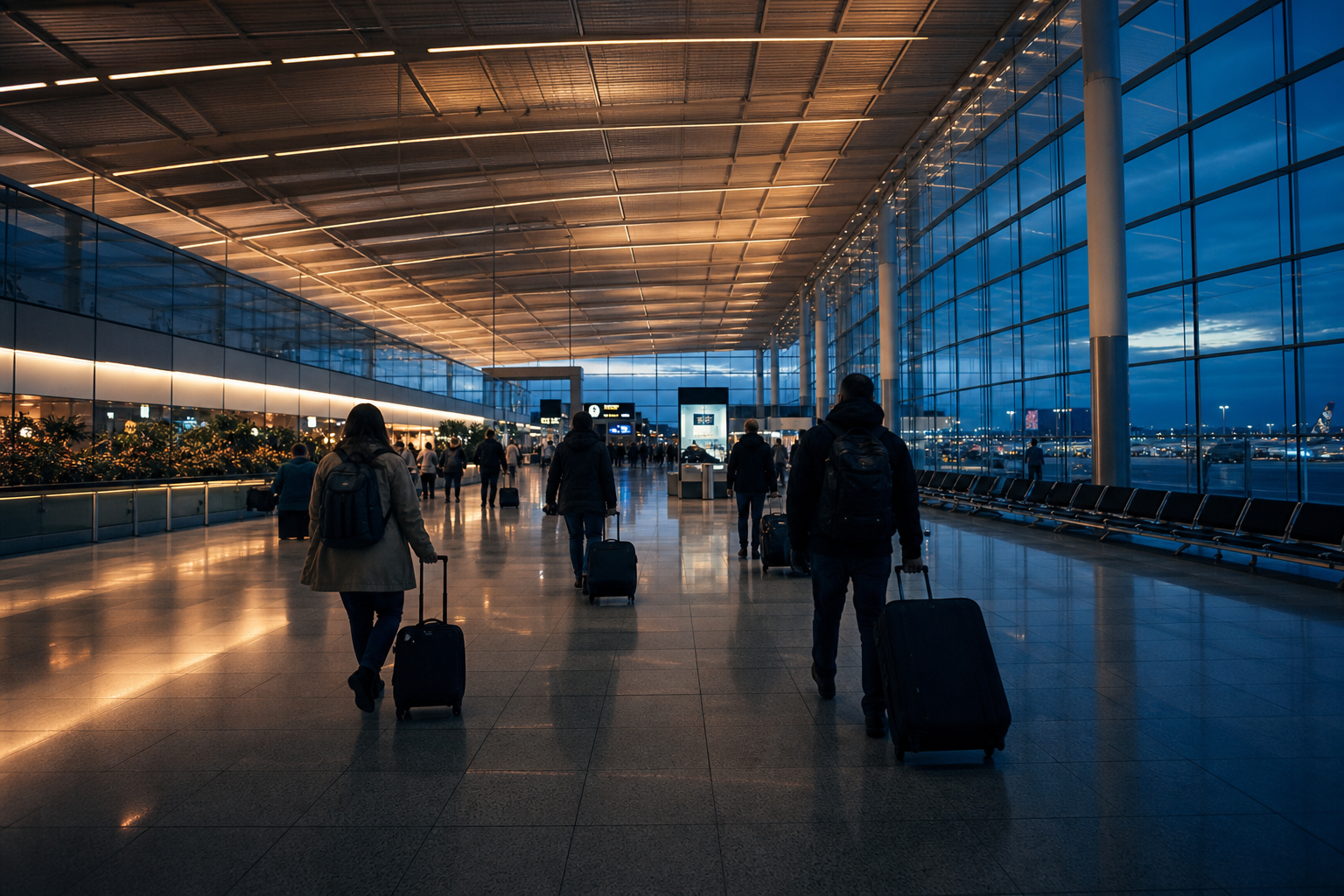
Changi Airport — 18 February 2027, 18:50 SGT

A family surgery deposit was due within two days. S$24,000 was in her carry-on. One form she had never heard of almost stopped her from boarding.

AirportTips is a pocket reference for Singaporeans at any border: how much cash you must declare, what cannot go in the bag, visas and eTAs, and the forms to file before you fly. Every figure is cited to the source, in Singapore dollars.

⚠ Advertisement — Sponsored Content This is a paid advertisement for the AirportTips app, published by Apron North Pte. Ltd. The narrative below is a fictional illustration, not a real news report or a real person. Figures used in the story are illustrative examples. This is not journalism, legal advice, or an independent review.

The call came at 06:10 on a Tuesday. Her father, overseas, needed an urgent procedure. The hospital would not hold the operating room without a cash deposit, paid in person. She booked the last seat that night, withdrew twenty-four thousand Singapore dollars from her own account, and packed the notes into her carry-on. She had checked the flight times, the arrival steps, and the route from the airport to the hospital. It never occurred to her that taking that much cash out of Singapore required a form of its own.

The rule is simple. Anyone leaving Singapore with S$20,000 or more in currency or monetary instruments must file Form CBM1 — the Cross Border Movement of Physical Currency and Bearer Negotiable Instruments Report. Carrying the money is allowed. There is no tax on it. There is only a duty to declare it, and that duty sits with the traveller, not the bank, the airline, or the travel agent. The destination may have its own threshold on the way in; that figure can be different from Singapore’s.

“The money was mine. It came from my savings. The hospital sent a letter. I had all of that. What I did not have was the form — because nobody, between buying the ticket and walking into Terminal 2, had said that such a form existed.”

At 19:20, during a routine check, she was asked how much cash she had with her. She told the truth. Then came Form CBM1. She did not know what that was. The next three hours were extra paperwork at the desk: the notes counted, the bank statements copied, the hospital letter read. She was not accused of anything. She was delayed because a required form had not been filed, and it had not been filed because she had never heard of it.

The declaration went through at 20:55. She left the desk at 21:15 with the form completed and the cash still hers. She boarded at 21:28. The doors closed at 21:36. She landed with hours to spare and paid the deposit in person the next morning. The surgery went ahead. Her father came home a month later.
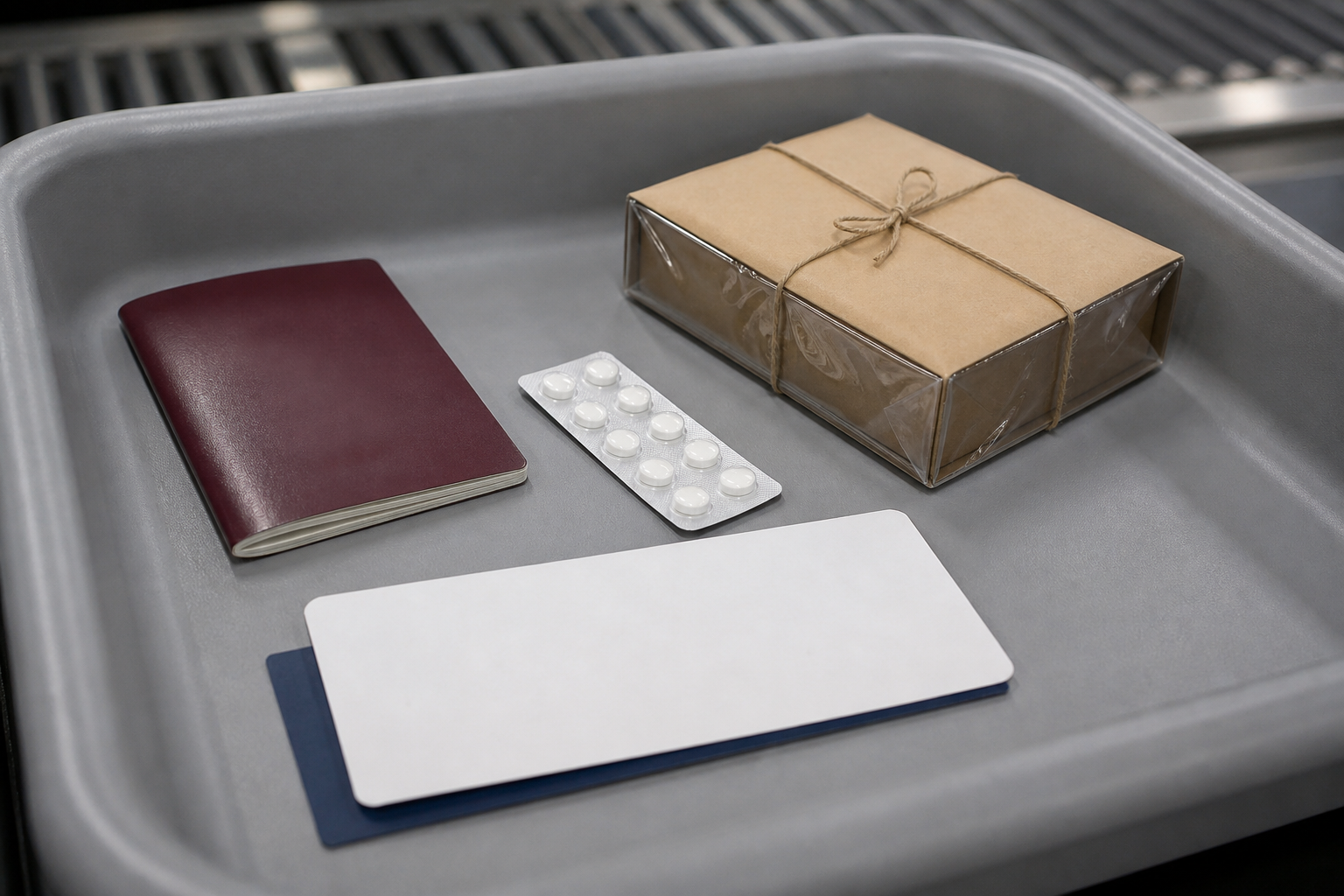
Travel documents and personal items in an airport security tray
Terminal 2, Changi Airport. Travellers carrying S$20,000 or more in cash or bearer instruments across the Singapore border must file Form CBM1. Check the current threshold and form on the official government site before you fly.

She started counting rules. The list did not end.

On the way home, she opened a notes app. She wrote down every rule that could have stopped that flight, and every rule that could stop the next one: Singapore’s S$20,000 cash line; the different lines that apply in countries Singaporeans fly to every week; goods that are ordinary here and prohibited there; visas and electronic authorisations that have to be in place days before you reach the gate. She works in operations. She knows a usable brief when she sees one. Border rules, she realised, are the reverse: thousands of fair, specific instructions spread across hundreds of government sites, almost none of them written for the person in the queue.

By the time she was back in Singapore she had the outline of AirportTips: a searchable, cited directory of what a Singapore passport holder needs before a border. Cash thresholds first — the rule that had nearly left her on the ground — then medicines and goods, then visas, then the small print people skip.

Carrying cash, medicine, or a gift for family? Read the rule before you zip the bag — free, and usable offline.

Download AirportTips

Arranged the way a Singaporean actually packs

AirportTips follows trip planning, not ministry filing systems. Ahead of a family visit it shows the cash-declaration figure in both directions, whether a prescription needs an extra permit, and what customs will ask. Ahead of a work trip it adds the visa or eTA window and the papers worth keeping in the cabin bag. Each entry names the statute, the form if there is one, and the government page it came from, so you can open the original in a minute.

Restricted goods are handled the same way: medicines that are routine at a polyclinic but controlled overseas, foods and natural products that need a declaration, electronics and tools that some countries license. If a rule can become a delay, a lost item, or a missed connection, AirportTips tries to show it while you can still leave the item at home or file the form.

The published rule is the same every day. A traveller meets it once, under time pressure. AirportTips puts that text in front of you on the planning day — not at the last minute.

One brief. Cited. Kept current.

AirportTips covers every UN member state plus Taiwan, Kosovo, and Palestine: cash thresholds, visas and eTAs, restricted and prohibited goods, customs declarations, and the local rules that surprise Singaporeans most often. Each row carries a citation — the section, the regulation, the gazette — and a link. When an authority changes a threshold or adds a restriction, the entry is updated, dated, and versioned, so you can see the rule and when it last moved.

AirportTips does not give legal advice. It does one job: it makes the rules that already apply to your trip readable, in Singapore dollars and Singapore context, before you reach the airport. There is no fee. Save a country pack and it still works without a signal, which is usually when you need it.
Three steps between packing and a quieter border.

Choose a country

Type a destination. AirportTips returns the border picture for a Singapore passport: cash limits both ways, entry papers, restricted goods, and the forms customs usually want.

Filter by what is in the bag

Cash, medicine, work samples, food gifts. AirportTips keeps the rules that touch those items and drops the rest — each with a form number and a citation.

Let the brief refresh

Thresholds move. eTA windows move. AirportTips watches gazettes and customs circulars for 193 destinations and updates saved countries in the week a change is published.

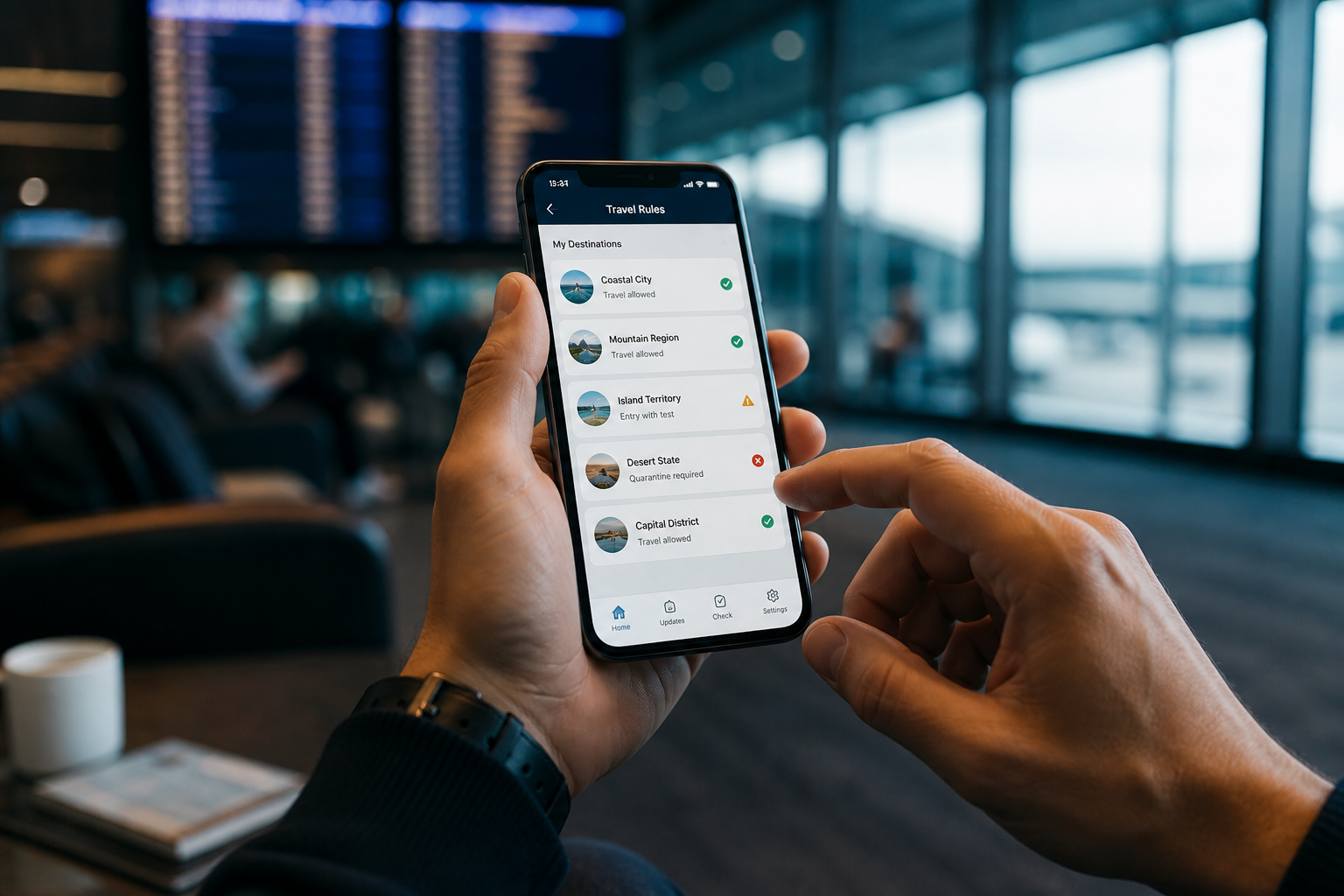
AirportTips on a phone in an airport lounge

What AirportTips covers for Singaporean travellers

Cash declaration thresholds
Singapore’s S$20,000 reporting duty (Form CBM1) plus the matching line at the other end of the flight — outbound and inbound. What counts as currency, what counts as a monetary instrument, and what follows if nothing is filed. Every figure is linked to the published source that sets it.
Visas and eTAs
Which countries need a visa, an electronic authorisation, or neither — for a Singapore passport. Processing times, validity, photograph rules, and the official portal. Deadlines appear as dates, not buried in paragraphs.
Medicines and restricted items
Prescriptions that are ordinary here and controlled there, foods and herbal products that need a declaration, electronics that need a permit. Each item lists the restriction, what it usually costs to get wrong, and the permit that usually solves it.
Customs declarations
What to declare, at what value, on which form, and at which desk. Digital pre-clearance, duty-free allowances, and the paperwork that has to exist before you land.
Local laws travellers miss
The gaps that differ most from Singapore practice — local bylaws, drone licences, everyday rules that catch visitors out — ranked by how often Singaporean travellers run into them, with the consequence stated plainly.
Weekly, versioned updates
Gazettes, customs circulars, and immigration bulletins are watched continuously. Each change is logged with a date and the amending instrument. Saved destinations refresh on their own.

Frequently Asked Questions

Who is AirportTips for?

Singapore residents who fly — to see family, to work, to study, or on holiday. Thresholds and documents are framed for a Singapore passport, in Singapore dollars where money is involved.

How is this different from reading government sites myself?

Every rule AirportTips shows is already public; the citation sits on the entry. The difference is assembly. Rules for one trip live across customs, immigration, and goods pages, often inside PDFs. AirportTips gathers them, filters by what you are carrying, and updates when the source changes.

Does it work without a signal?

Yes. Save a destination before you leave and the full brief — thresholds, forms, citations — stays readable offline. Packs refresh once you are back on a network.

Where does the information come from?

Primary sources: customs acts, immigration regulations, official gazettes, and published notices. Each entry shows the statute reference and a link. When a rule is amended, the entry is versioned with the date of change.

Is AirportTips legal advice?

No. AirportTips is a reference. It shows the published rule and where it appeared. It does not interpret the law or tell you how to comply in your case. Knowing the text before you travel is still the cheapest way to avoid a surprise.

What does it cost?

Nothing. No subscription and no in-app purchases. We ask for your name and email so we can send the download link; that handling is described in our Privacy Policy. AirportTips is published by Apron North Pte. Ltd.

The following section contains the registration form, clearly separated from the sponsored editorial content above.

Get early access — free

Leave your details and we will email the download link when it is ready for your device. Submitting the form gives us your name and email so we can contact you; see our Privacy Policy for how that data is used.

We use your details only to contact you about AirportTips. Privacy Policy · Terms · Cookies